The New Lords of the Land
How the Mandal Commission Transformed India's Caste Hierarchy and Empowered a New Class of Oppressors
Introduction: The Unraveling of an Implicit Covenant
On 7 August 1990, Prime Minister Vishwanath Pratap Singh rose in Parliament and announced that his government would implement the recommendations of the Mandal Commission, reserving 27 percent of central government jobs for Other Backward Classes. Within weeks, a student named Rajeev Goswami set himself on fire in protest. The old social order was being systematically dismantled, but what emerged in its place was not the egalitarian utopia promised by social justice rhetoric—it was a new hierarchy, with powerful OBC castes at its apex, oppressing everyone beneath them with impunity.
This is not merely a story about reservation policy. It is a story about the creation of a new political and social elite that has used the language of victimhood to acquire power while practicing the very oppression they claimed to oppose. The Mandal Commission did not cause caste conflict; it merely replaced one set of oppressors with another, more ruthless and more entrenched set.
The Commission's Genesis: A Janata Party Bargain
The Mandal Commission was born not of high principle but of low political calculation. On 1 January 1979, the Janata Party government, under Prime Minister Morarji Desai, appointed Bindeshwari Prasad Mandal, a former Chief Minister of Bihar, to head the Second Backward Classes Commission. The Janata Party's election manifesto had promised such a commission, but the timing was driven by internal factional politics. The party's socialist wing, seeking to counter the influence of Chaudhary Charan Singh over the farmer vote, pressured Desai to act.
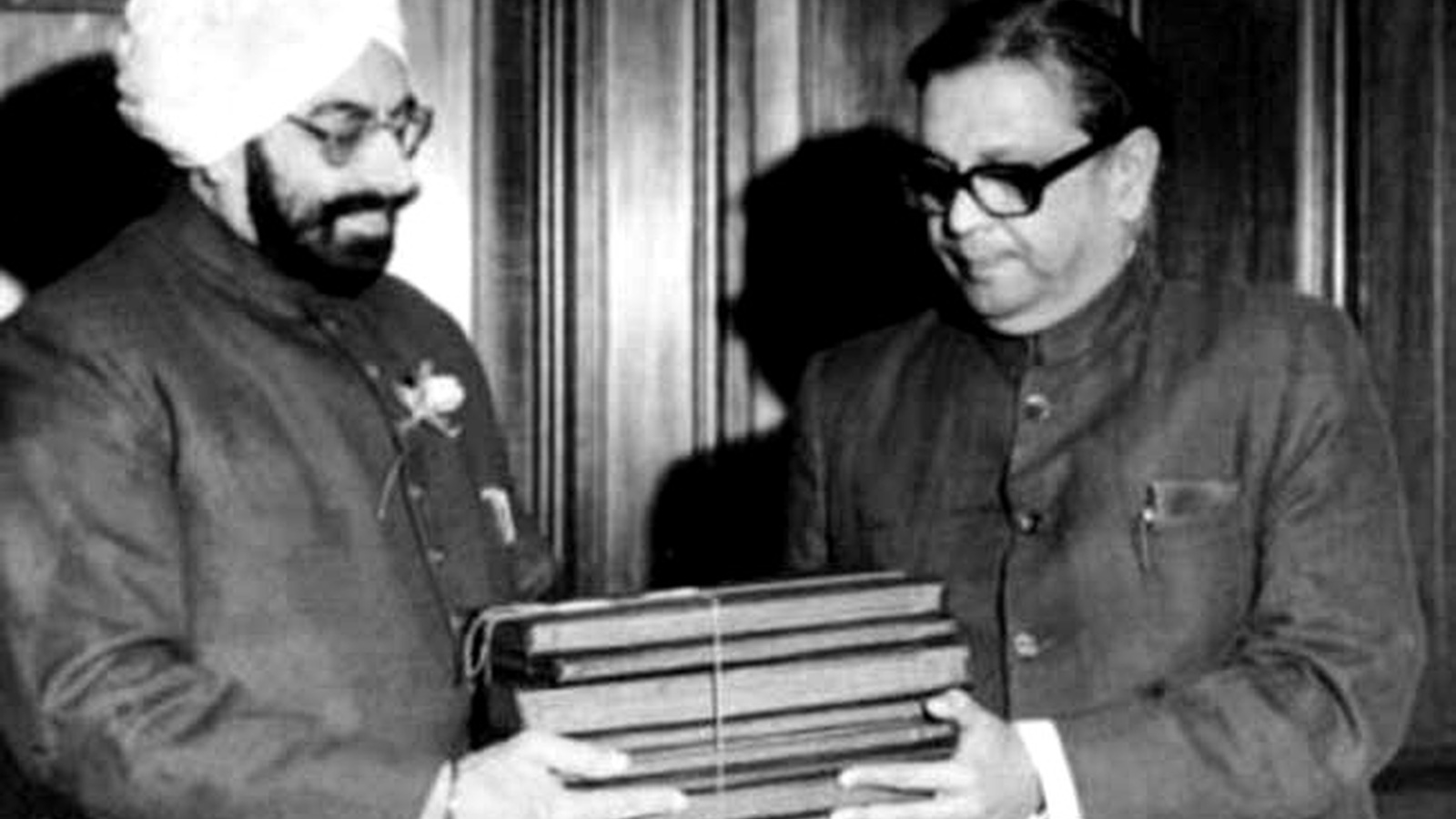
The Commission submitted its 426-page report on 31 December 1980. By then, the Janata government had fallen, and Indira Gandhi had returned to power. The report gathered dust for a decade.
The First Burial: Congress Resistance
Indira Gandhi's cabinet repeatedly refused to implement the Mandal report. The Cabinet Committee on Political Affairs, comprising PV Narasimha Rao, R Venkatraman, Pranab Mukherjee, and Giani Zail Singh, vetoed the proposal four times. They warned that implementation would cause "irreversible fissures between the people of the country and lead to law-and-order problems throughout the country with riots erupting down to the village level". Rajiv Gandhi, who succeeded his mother, reportedly called the report "a can of worms" and refused to open it.
The Congress understood that caste-based reservation was a political weapon that, once unleashed, could not be controlled. It would fragment the Hindu vote, create a permanent backward-class political consciousness, and ultimately undermine the party's ability to govern through a coalition of upper-caste and Dalit voters.
The Second Coming: VP Singh's Political Gambit
By 1990, VP Singh was Prime Minister of a minority National Front government, dependent on external support from the BJP and the Left. His deputy, Devi Lal, was openly challenging his authority. Lalu Prasad Yadav advised Singh to implement the Mandal report to counter Devi Lal's backward-caste base.
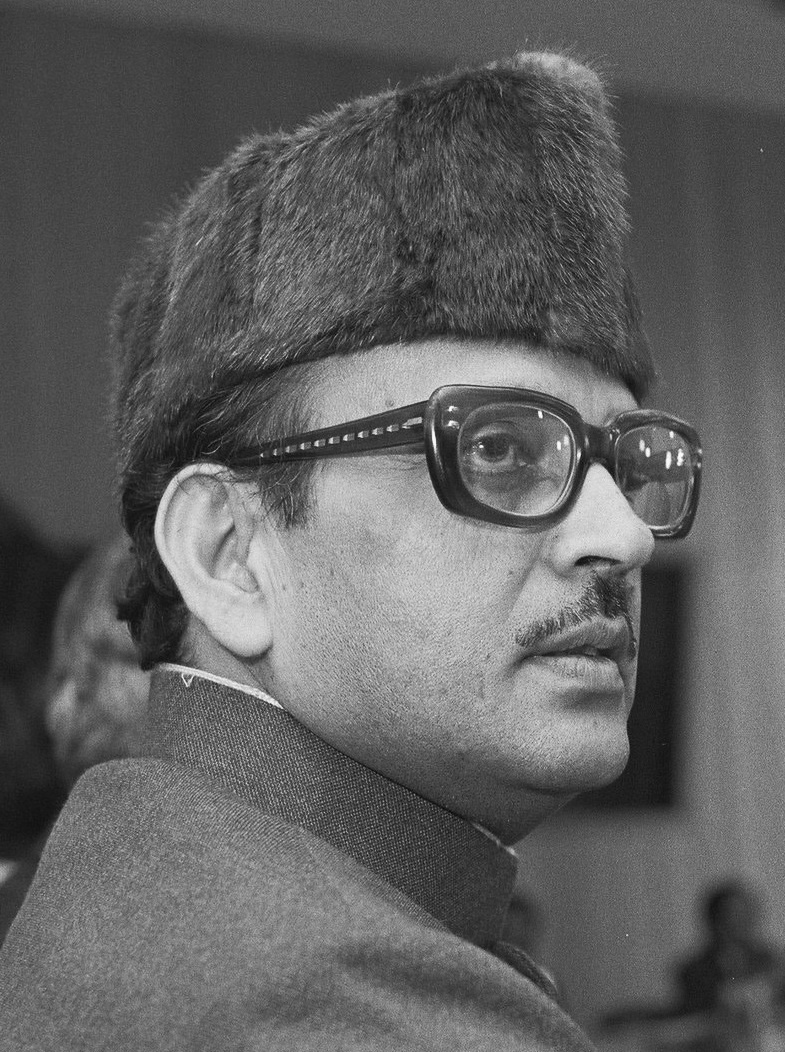
Singh announced implementation on 7 August, two days before Devi Lal's Kisan rally in Delhi. The timing was deliberately provocative. As India Today noted at the time, "the announcement was a sure indication of the cynicism with which Singh approached the matter". It was a political survival tactic, dressed in the language of social justice.
Singh himself revealed the strategic nature of the move in a Lok Sabha debate on 25 September 1991. He argued that "52% of the population gets 12.55% in Government employment" and declared his intention to "change the structure basically, consciously, with open eyes." The language was that of class warfare, not civilizational renewal.
The Anti-Mandal Protests: A Generation in Flames
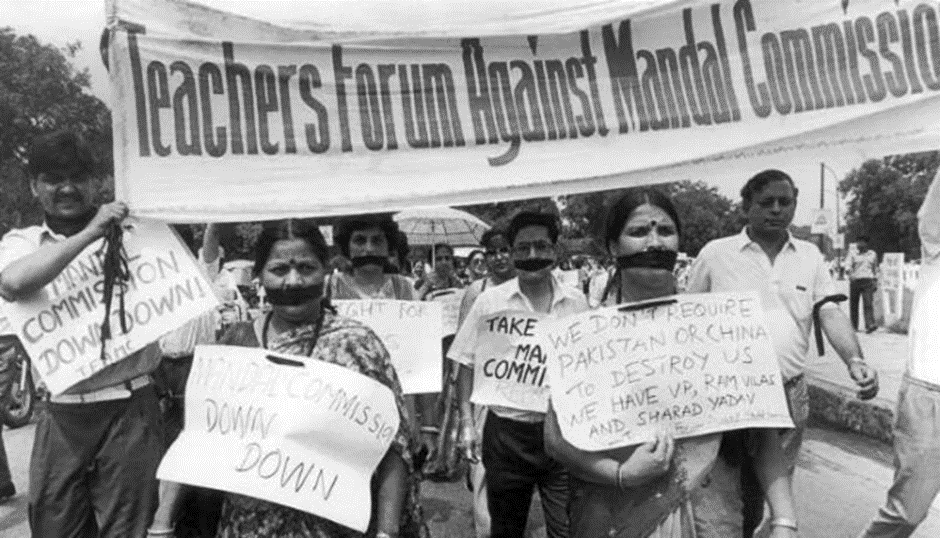
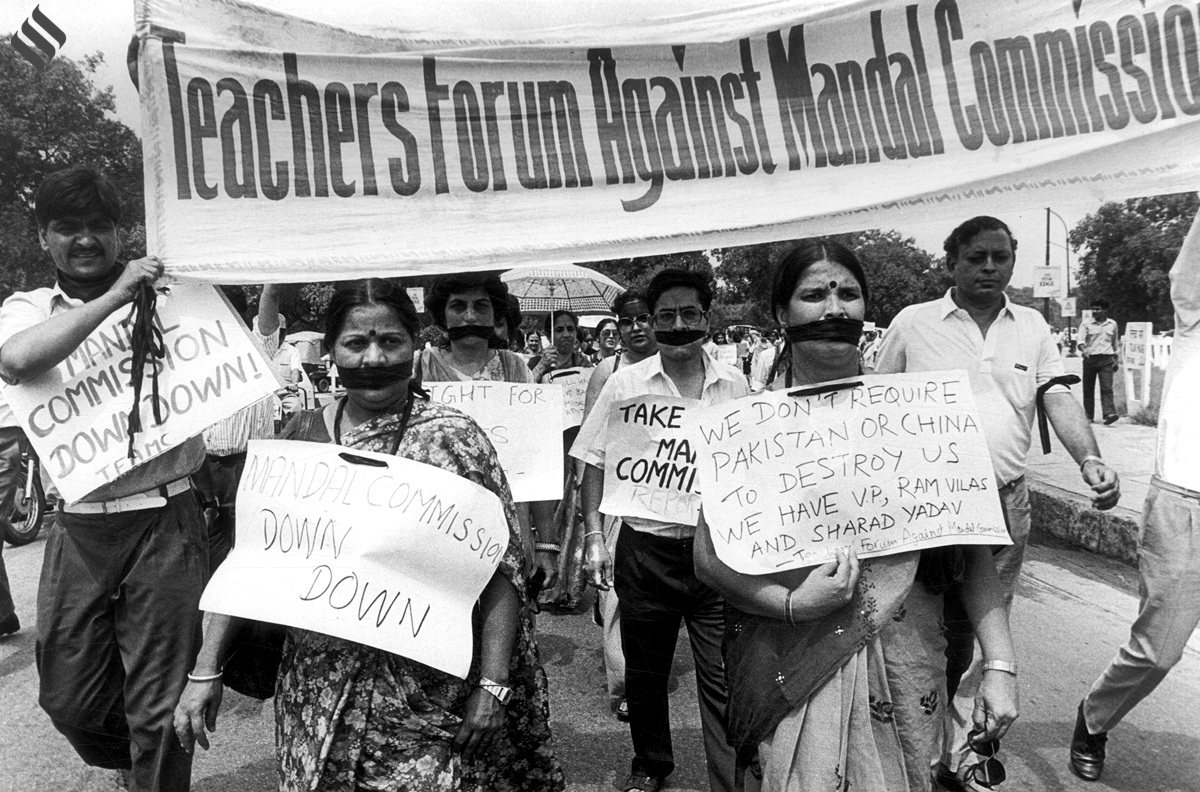
The reaction was immediate and violent. Students, bureaucrats, and teachers protested across North India. The protests took a shocking turn on 19 September 1990, when Rajeev Goswami, a 20-year-old student at Deshbandhu College in Delhi, set himself on fire. He survived with 50 percent burns, but his act sparked a wave of self-immolation attempts across Delhi, Hissar, Sirsa, Ambala, Meerut, and Lucknow.
|
|
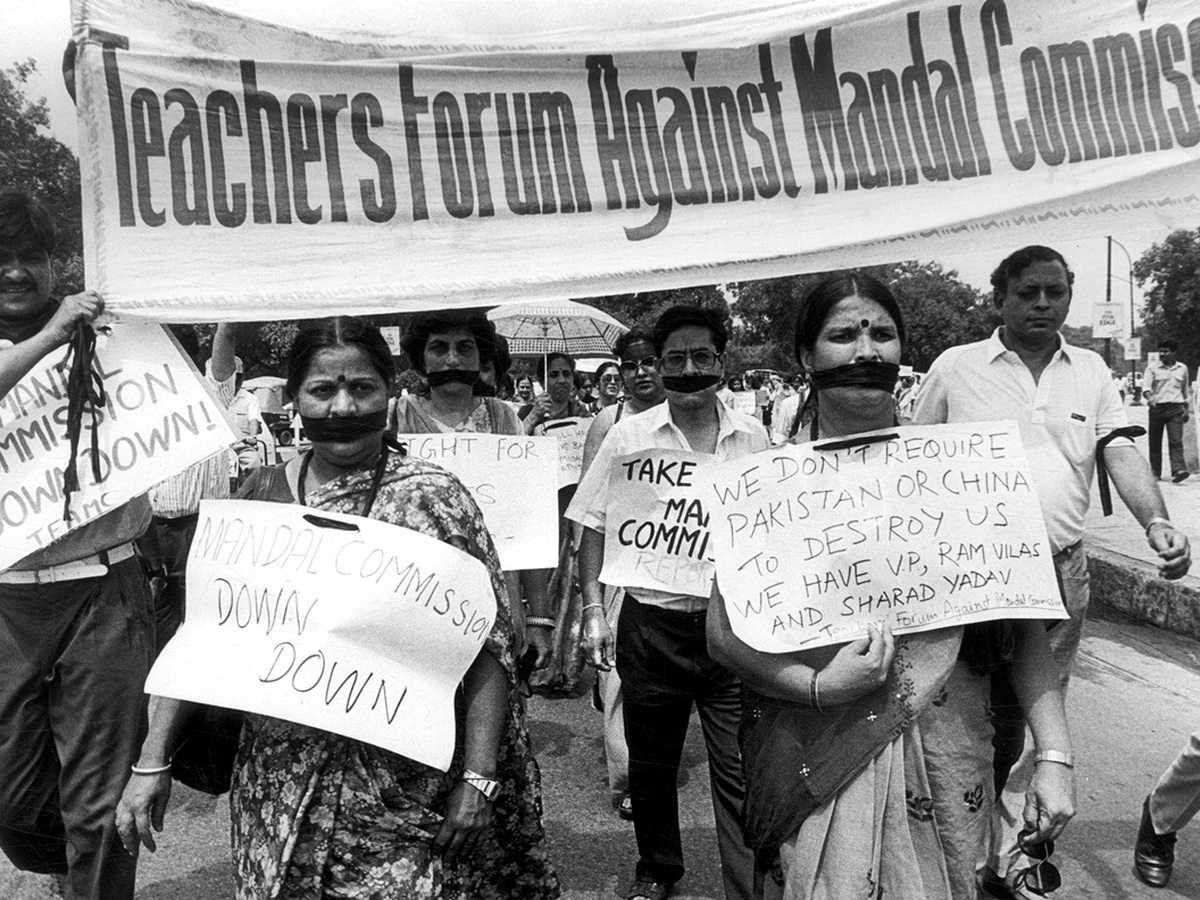
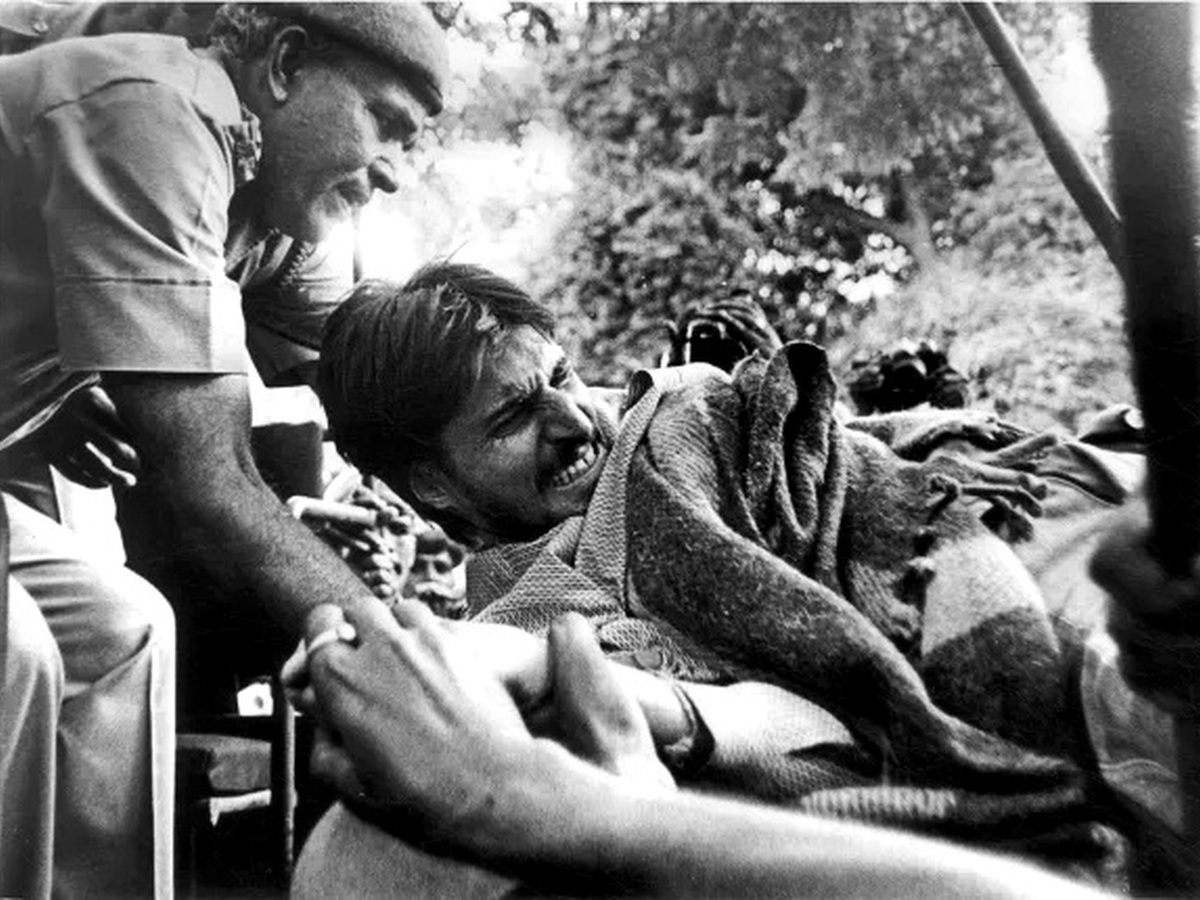
Goswami was the only son of a middle-class Punjabi family. His father was a clerk in the Postal Department. He was not protesting a historical injustice but a contemporary threat: the closure of opportunities for his generation. The promise of meritocracy, which many had internalized as the natural order, had been revoked.
The Legal Challenge: Indra Sawhney and the Creamy Layer
The constitutional validity of the 13 August 1990 Office Memorandum was challenged in the Supreme Court. On 16 November 1992, a nine-judge bench delivered its verdict in Indra Sawhney vs Union of India. The Court upheld OBC reservations but imposed two crucial conditions: total reservations should not exceed 50 percent, and the "creamy layer" among backward classes must be excluded from reservation benefits.
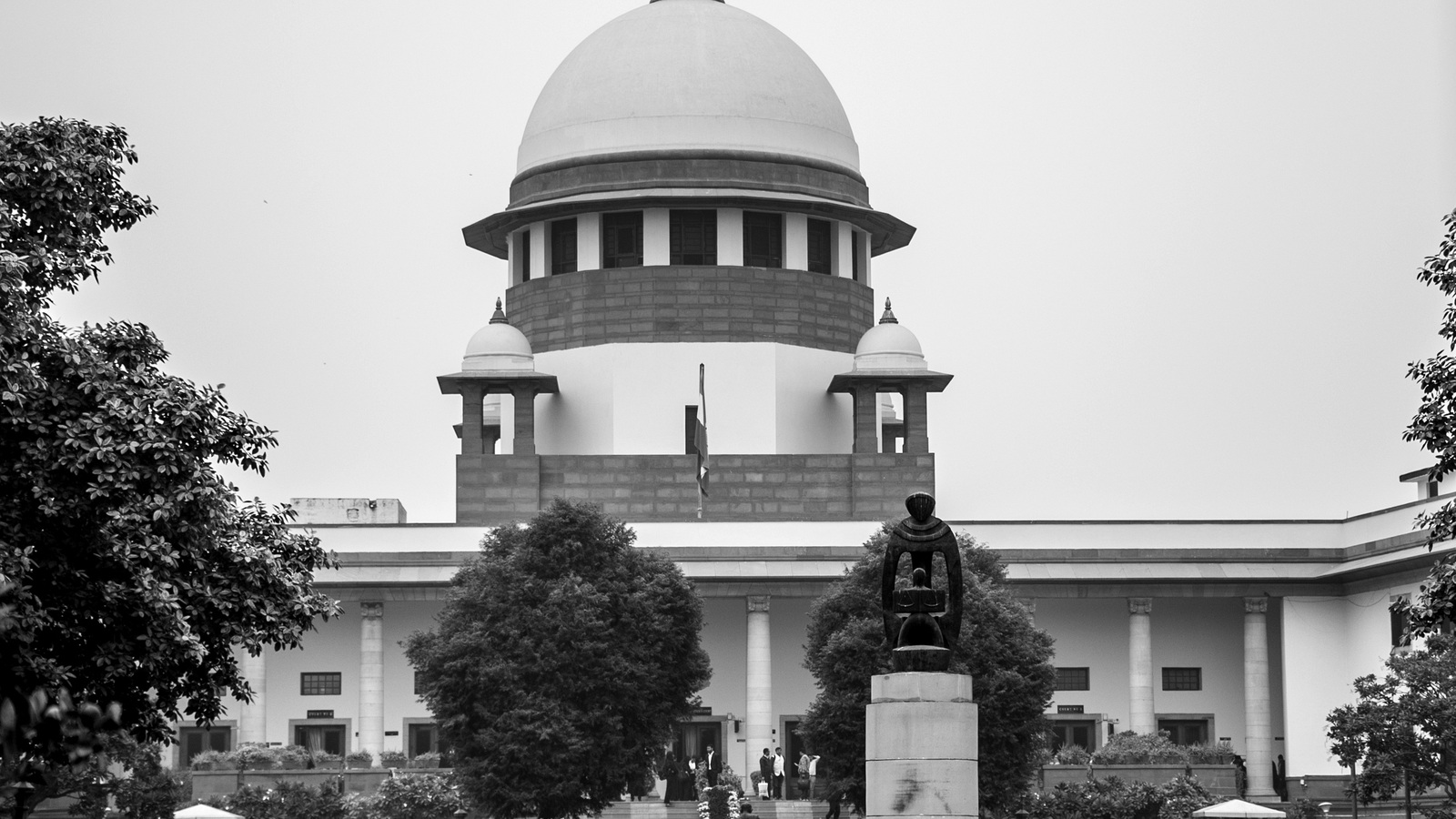
The creamy layer provision was intended to prevent the benefits of reservation from being "snatched away by the top creamy layer of the backward castes". It applied only to OBCs, not to SC/STs. This created a two-tier system: OBCs had to prove they were not too successful to receive benefits; SC/STs did not. The creamy layer ceiling for OBCs is generally fixed at an annual family income of Rs 8 lakh, although exclusion is not determined by income alone.
The irony was profound. The very criteria that were supposed to make reservation more equitable created new hierarchies within backward communities. The children of OBC professionals were excluded; the children of SC/ST professionals were not.
Who Really Benefits?
The Mandal Commission identified 3,743 castes as OBCs, estimated at 52 percent of the population. Yet the benefits of reservation have not been distributed evenly among them. The Rohini Commission, appointed in 2017 to examine sub-categorisation of OBCs, found devastating evidence of concentration of benefits.
The data revealed that "relatively dominant groups like Yadavs, Kurmis, and Jats were shown to have cornered nearly half of the total benefits despite making up only about 10 per cent of the total OBC population". A quarter of the share of benefits went to just 10 OBC castes, another quarter to 38 castes, a third quarter to 102 castes, and under a fourth to 506 castes. |
Even more shocking, 983 OBC communities had received nothing under the quota, while 994 castes had received just 2.68 per cent of the benefits. Less than 1 per cent of the 2,633 OBCs in the Central list had cornered 50 per cent of the reservation benefits in admissions to Central educational institutions and jobs between 2014 and 2018.
This is the dirty secret of Indian reservation politics. The benefits of affirmative action have been captured by the most powerful OBC castes—the very groups that had the social and economic capital to take advantage of government schemes. The most backward among the backward remain excluded, while their more fortunate caste brothers use the system to consolidate their position.
OBCs as Oppressors:
The narrative that OBCs are perpetual victims of upper-caste oppression is belied by the evidence of their own oppressive behavior. OBC castes are frequently the perpetrators of caste violence against Dalits and other vulnerable communities going back hundreds of years.
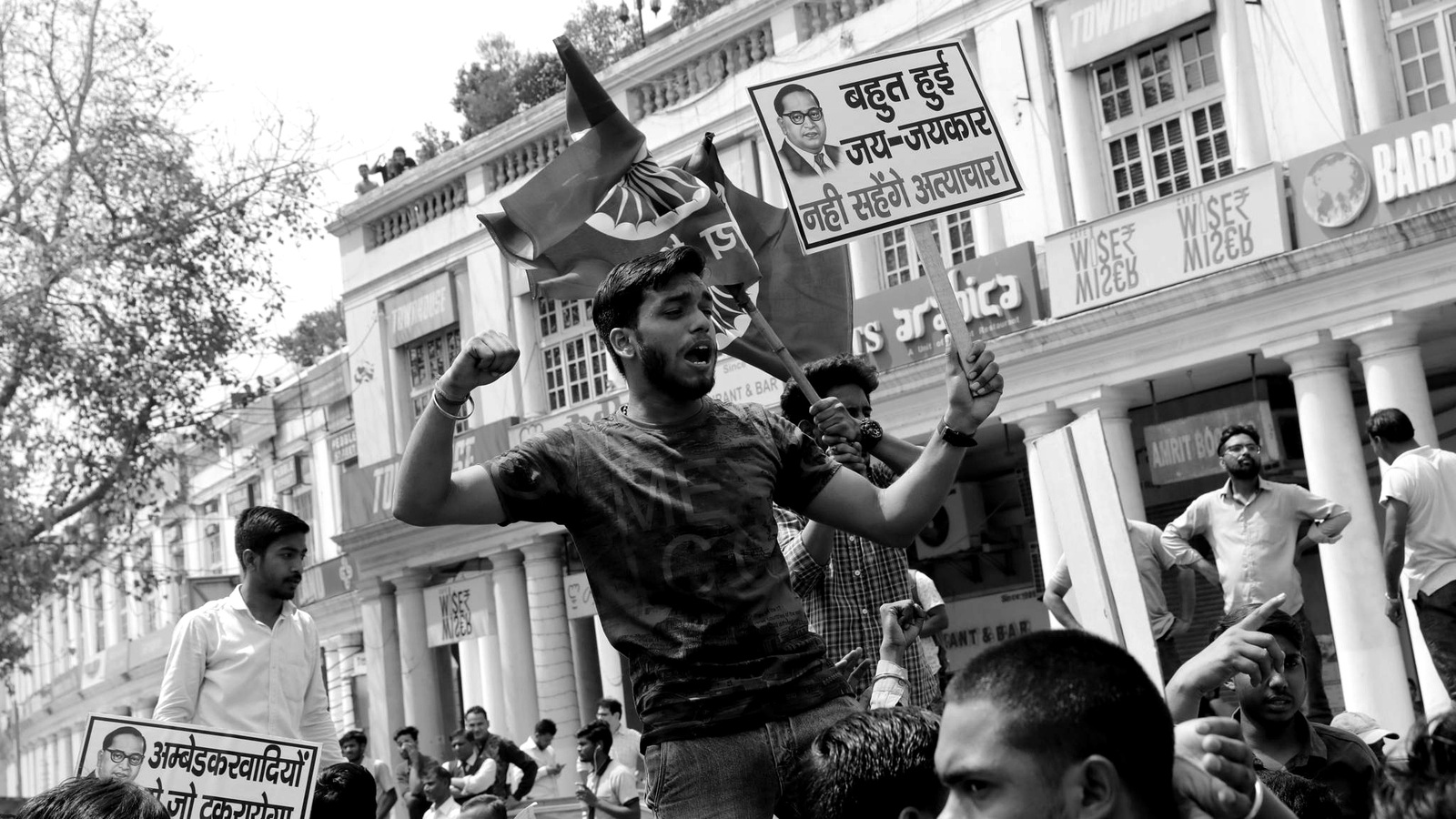
In Tamil Nadu, dominant OBC communities such as Gounders, Thevars, and Vanniyars continue to organize lethal violence against Dalits, particularly in cases of inter-caste relationships, with violence orchestrated by families and legitimised by caste panchayats operating entirely outside any legal framework. The Agamudaiyar community, which comes under the Thevar caste cluster, has been responsible for multiple brutal attacks on Dalits.
Thevars, who are OBCs in Tamil Nadu, have committed numerous atrocities on the Dalit community. In one case, three youths from the dominant Thevar community hacked the wrist of a 20-year-old Dalit boy for allegedly riding a Royal Enfield Bullet motorbike. In another, a Dalit boy and his sister were brutally assaulted at home by their schoolmates who belong to an intermediate dominant caste.
The pattern is not limited to Tamil Nadu. Across India, OBC castes have become the primary perpetrators of caste violence. As one sociologist noted, "OBCs – not Brahmins and other caste Hindus – are the main caste rivals of the Dalits".
The Bihar Story: Yadavs as Neo-Lords
Bihar provides the most vivid example of how OBC political dominance has translated into oppression of other communities. The Yadavs of Bihar "emerged as the most powerful and eventually domineering group". The rise of the Yadavs "acted as a catalyst for the Other Backward Classes (OBCs)", but Yadavs themselves, who "claimed to be oppressed till then, were seen as the oppressors, Neo lords, if you will".
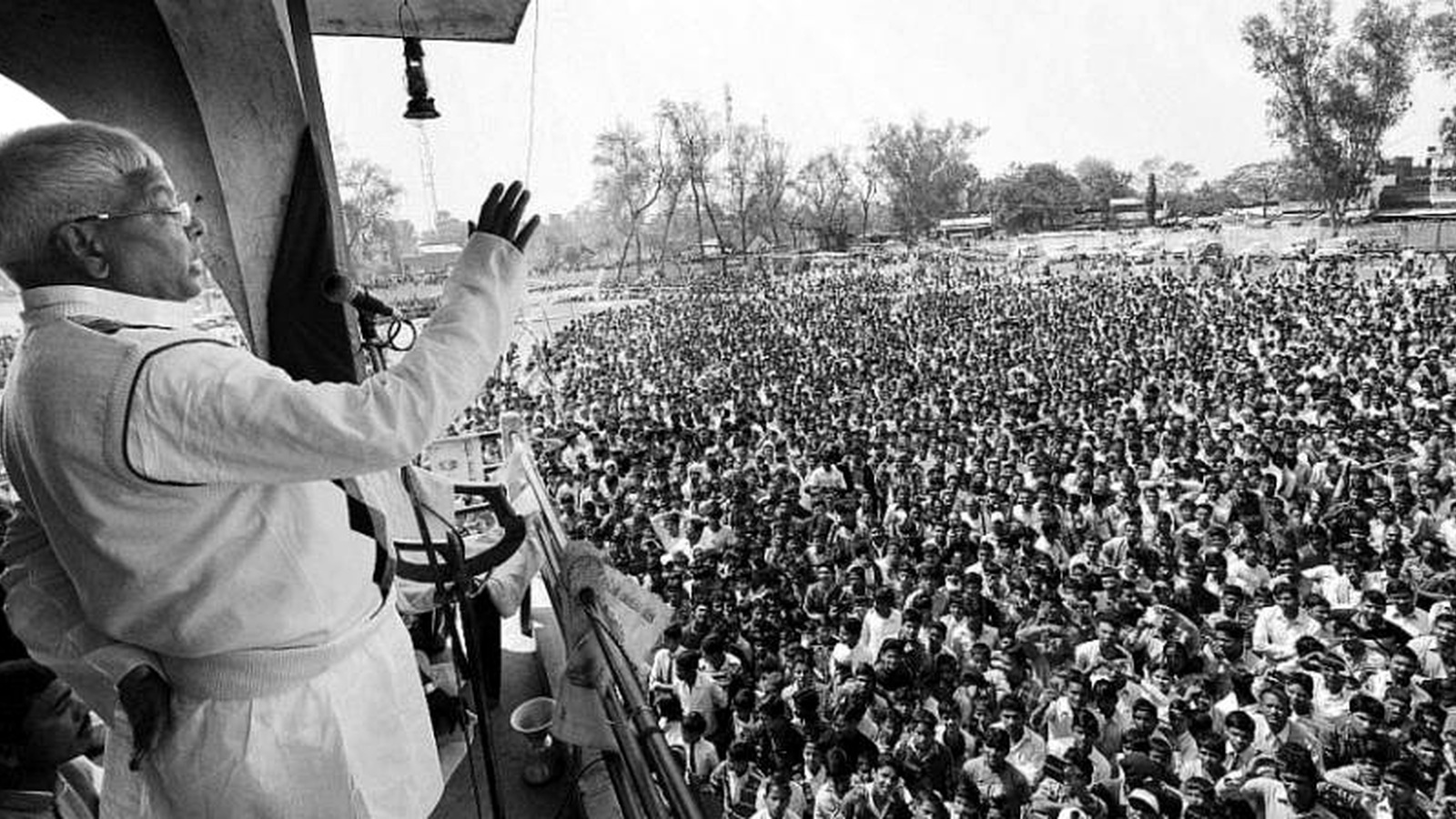
The electoral dominance of the Yadav community has come at the expense of other backward groups. Smaller backward groups "were anxious — would the dominant Yadavs corner a lion's share of reservations? Would the spoils of the 'garibon ki sarkar' (government of the poor) flow only to Prasad's (Yadav) acolytes?".
Upper castes in Bihar have felt "oppressed, at least politically, by the dominance of non-savarnas here". The political dominance of Yadavs has created a situation where "almost every community except Yadavs and a section of Muslims abandoned the Grand Alliance", with the backward share (Yadavs dominant among them) swelling to nearly a half of the population.
The result is a new hierarchy/extra powerfull where Yadavs, while claimants to victimhood, have become the new oppressors, wielding disproportionate political power while other communities both upper caste and extremely backward are marginalized.
The Dominant Caste: Marathas, Jats, and the OBC Bazaar
The OBC category has become a convenient vehicle for dominant castes to claim victimhood and acquire the benefits of reservation. The phenomenon is pan-Indian.
In Maharashtra, the Maratha community—"numerically and politically the state's dominant community"—has been agitating for OBC status. Traditionally, Marathas were "a dominant caste-landowning, politically central, and socially influential" community. Yet they have demanded and received OBC benefits, sparking fresh divides and angering genuine OBC groups who saw it as an intrusion into their share.
|
|
|
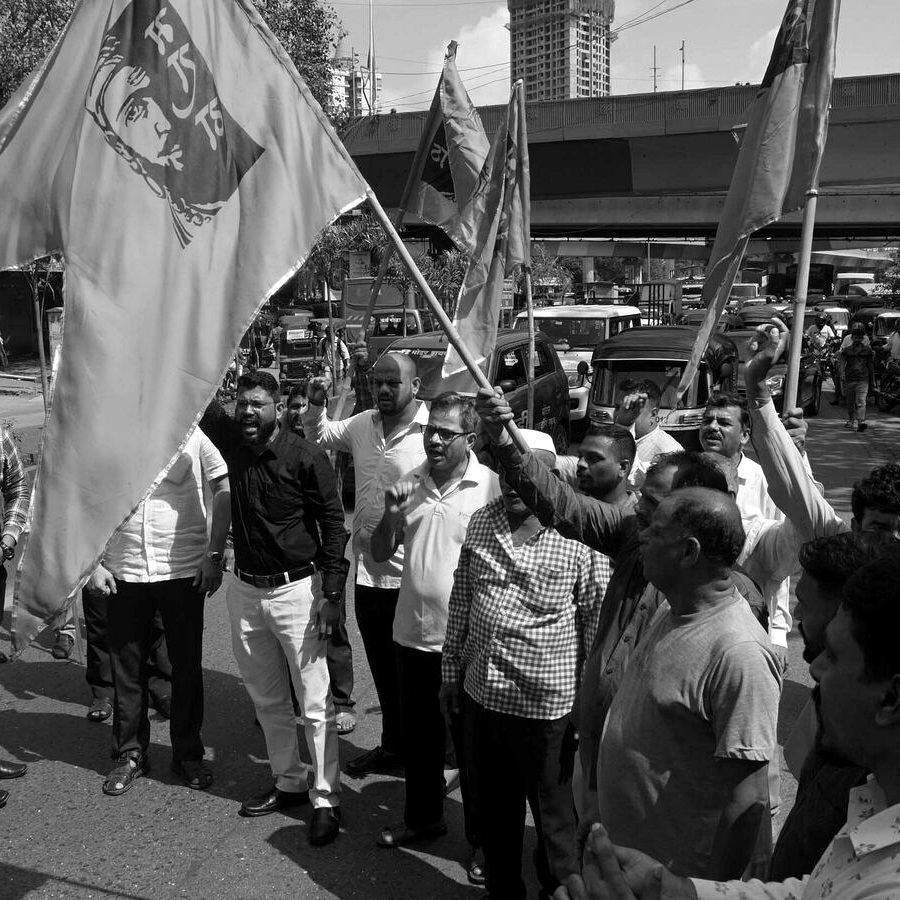
The demand for OBC reservation for Marathas through Kunbi recognition has been led by activist Manoj Jarange Patil. The Maharashtra government has issued resolutions granting Marathas OBC status, drawing accusations that it "arbitrarily extended the OBC status to Marathas, who are a politically dominant and socially advanced community".
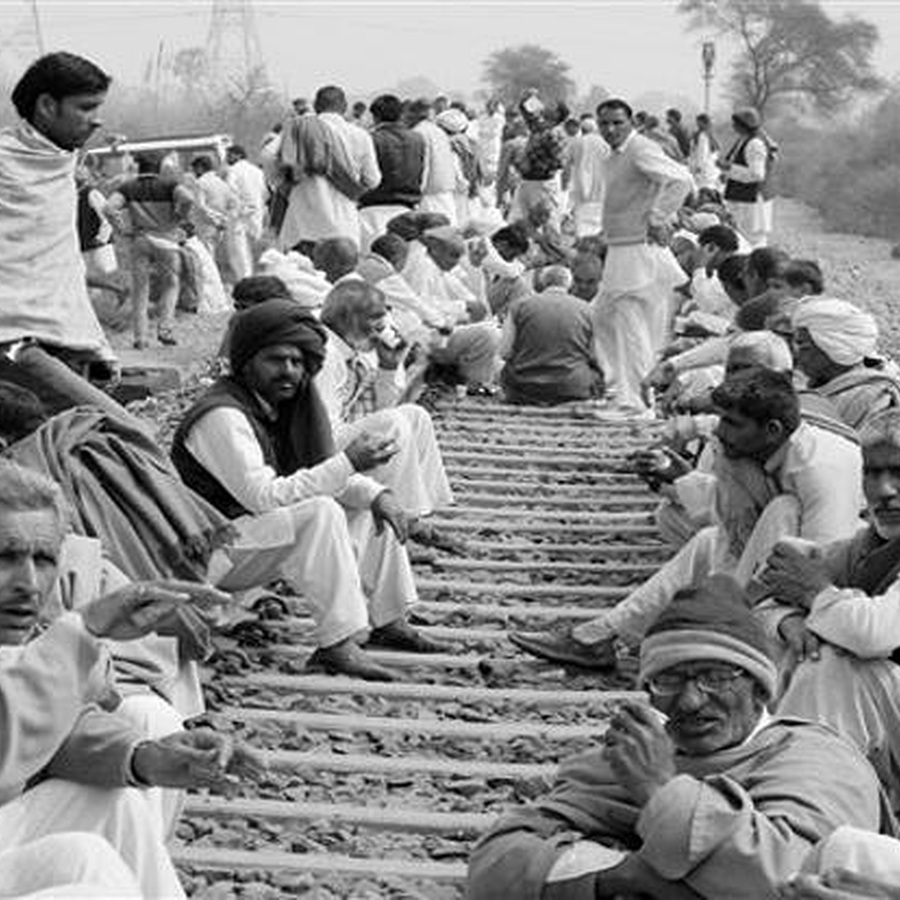
In Haryana, Jats—who are among the most politically and economically powerful communities in the state—have demanded OBC status. Out of 92 castes in OBC, only 17 to 20 have complete dominance over political participation, government jobs, agriculture, and other resources. In terms of the total number of families with political participation in OBC, Jats are at the top.
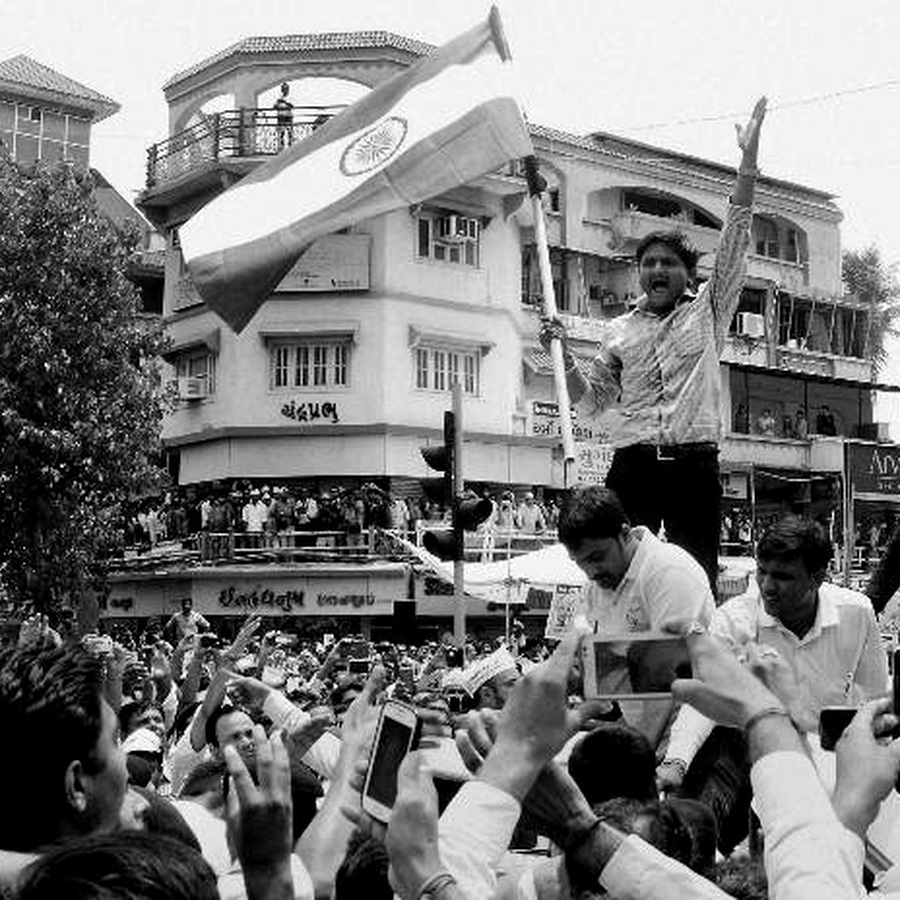
In Gujarat, Patels have similarly demanded and received OBC status. The pattern is consistent: dominant landowning castes, which have historically wielded political and economic power, are using the OBC category to consolidate their position while claiming victimhood.
When Dominant Castes Claim Victimhood
The demand for OBC status by dominant castes is not a demand for social justice but a demand for political power. As OBC status confers access to government jobs and educational institutions, dominant castes that have lost economic ground due to structural changes in the economy seek to regain it through the reservation system. The language of victimhood is a cover for the pursuit of advantage.
The Rohini Commission's findings demonstrate that sub-categorisation of OBCs is urgently needed to ensure that benefits reach the truly backward. But successive governments have been reluctant to implement sub-categorisation because it would upset the dominant OBC vote banks that sustain their political power.
The politics of OBC reservation has created a perverse incentive structure. The most backward OBC communities—983 out of 2,633—receive nothing. Meanwhile, the most powerful OBC castes receive the lion's share of benefits. The system does not help the truly oppressed; it helps the politically connected.
SC/ST Atrocities Data
The National Crime Records Bureau data reveals the extent of violence against Dalits, much of it perpetrated by OBC communities. In 2022, over 50,900 crimes were reported against Scheduled Castes, with Uttar Pradesh alone accounting for 13,000 cases. Between 2013 and 2023, there has been a 46 percent increase in crimes against Dalits and a 91 percent increase in crimes against Adivasis.
The NCRB reported 57,789 cases registered against SCs in 2023. These are not merely statistics; they represent lives destroyed by caste violence. The perpetrators of this violence are disproportionately from OBC communities. As one report noted, "out of total crimes against dalits, only 10% are filed under SC/ST act" and "out of remaining cases, >85% cases are filed on OBC/minorities". |
The narrative of Brahminical oppression obscures the reality that OBC castes are the primary perpetrators of caste violence in contemporary India. The language of "upper caste vs. lower caste" has been replaced by "OBC vs. Dalit," with the OBC communities using their political power to oppress those below them.
OBCs and Caste Practices
The evidence of OBC caste practices is overwhelming. In Madhya Pradesh, a survey revealed that "56 per cent of OBC families still stand up when upper-caste individuals pass their homes as a mark of 'respect'". This demonstrates that OBCs, far from being opponents of caste hierarchy, actively participate in and reinforce it.
In Tamil Nadu, the rate of inter-caste marriage is the lowest in the country, despite the absence of Brahmins from the political landscape. OBC Thevars make Dalits clean their sewers and practice a two-tumbler system reminiscent of the worst caste discrimination.
The hypocrisy is striking. OBC politicians and activists rail against "Brahmanism" while practicing the most vicious forms of caste discrimination. They claim to represent the oppressed while oppressing those below them. They demand social justice for themselves while denying it to others.
The BJP's Complicity: Expanding the OBC Umbrella
The BJP, which once opposed Mandal politics, has become a willing participant in the expansion of OBC benefits. The party has systematically brought general category castes under the OBC umbrella to solidify their voter base. In Maharashtra, the BJP government granted Marathas OBC status. In Uttar Pradesh, the party appointed a Kurmi leader as state president to consolidate OBC support.
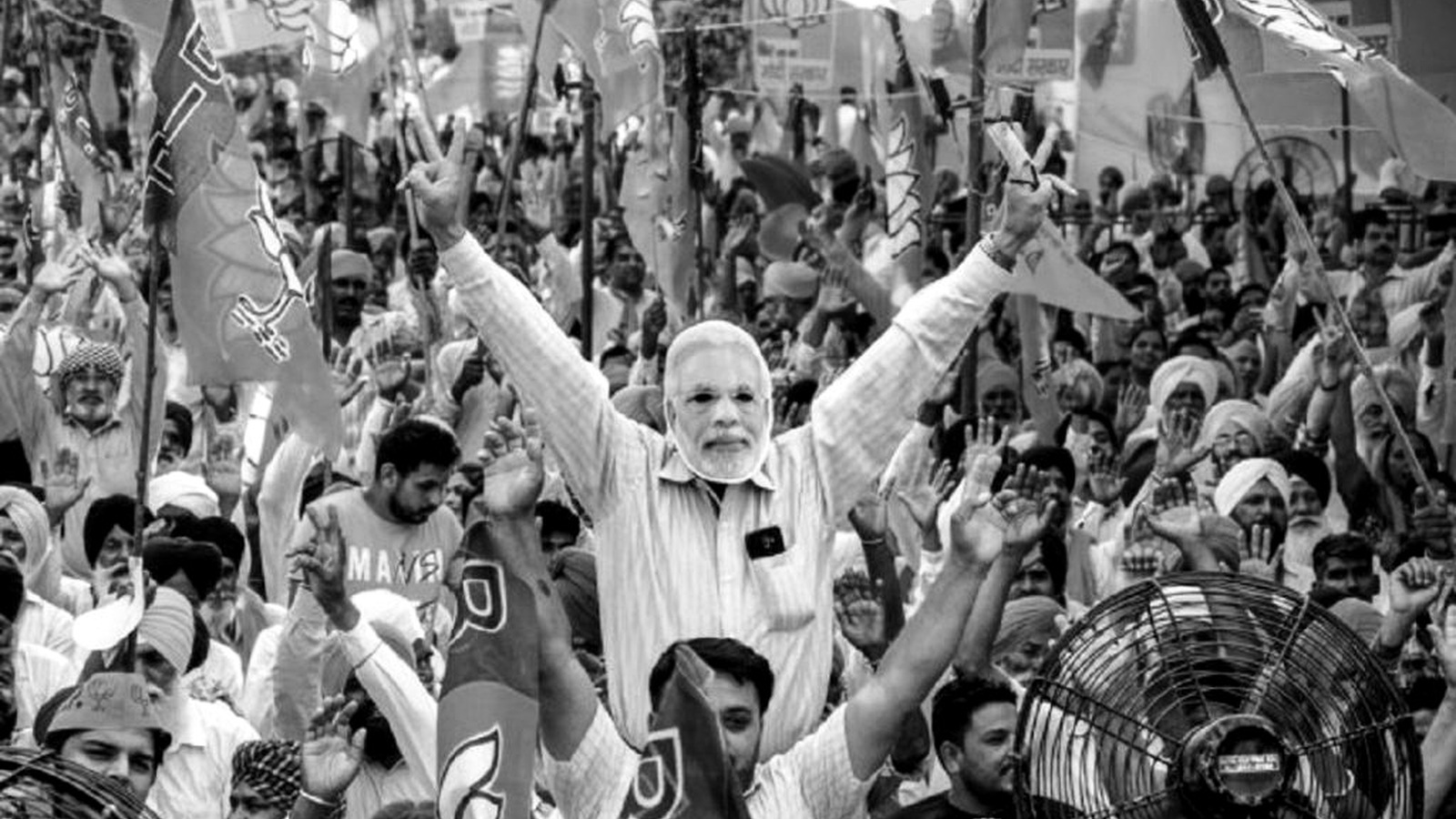
The RSS has openly stated that reservation has to be continued for a longer duration as "repentance" for historical prejudice. This is a political calculation, not a philosophical position. The BJP and RSS are not defending the truly backward; they are building a coalition of dominant OBC castes that can deliver electoral victories.
The party that claims to represent Hindu nationalism has become the vehicle for caste politics, expanding the OBC umbrella to include everyone except those who cannot mobilize politically. The result is a reservation system that benefits the politically powerful while excluding the truly marginalized.
The Hollowing of Hindutva: Why Caste Politics Triumphs
The BJP's relationship with its core upper-caste support base is deeply ambivalent. On one hand, upper castes form a crucial part of the party's support base. On the other hand, the party's electoral strategy requires appealing to OBC voters who have historically voted for regional parties.
This tension has produced a party that talks about Hindu unity but practices caste politics. The BJP has not dismantled reservation; it has expanded it. The party that was once the natural home of upper castes now competes with OBC parties for backward-caste votes.
The result is a political system in which no one can mobilize on the basis of their identity without being accused of casteism—except OBCs. They are too large a percentage of the population to be ignored. They are too geographically dispersed to be marginalized. And they are too politically powerful to be challenged.
The Future: Sub-Categorisation and the Politics of Division
The Rohini Commission's recommendation for sub-categorisation of OBCs is an admission that the reservation system has failed. The dominant OBC castes have captured the benefits of reservation; the truly backward remain excluded.
But sub-categorisation will only deepen caste divisions. It will create new hierarchies within the OBC category, with each sub-group demanding its own quota. It will not address the fundamental question of whether caste-based reservation is the best mechanism for addressing disadvantage in a society where class inequality is increasingly the dominant form of inequality.
The alternative—economic criteria for reservation—has been rejected by the political class because it would undermine the caste-based vote bank that sustains them. The politicians who benefit from caste politics are not interested in solving the problem; they are interested in maintaining the system that gives them power.
The Brahmin's Burden: Exclusion Without Compensation
The Brahmin intellectual and cultural capital, accumulated over millennia, became a liability after 1990. The very qualities that had once guaranteed success—educational attainment, linguistic proficiency, cultural confidence—now marked them as targets for resentment.
The Bihar caste survey of 2023 revealed that 25.32% of Brahmin families in the state are poor. Brahmins are not uniformly privileged. Yet they are treated as a monolithic category, excluded from reservation benefits while simultaneously blamed for the caste system's persistence. |
Meanwhile, the OBCs who have captured the benefits of reservation—Yadavs, Jats, Marathas, Patels—are among the most powerful communities in their respective states. They have land, political power, and economic influence. Yet they continue to claim victimhood while oppressing those below them.
Conclusion: The Unfinished Reckoning
The Mandal Commission was not a conspiracy against any single community. It was a response to genuine social disadvantage. But the implementation of the Mandal report has produced unintended consequences that are deeply damaging to Indian society.
The old hierarchy was replaced not by equality but by a new hierarchy. The OBC castes that captured the benefits of reservation are not the oppressed but the new oppressors. They practice caste discrimination against Dalits, they exclude the most backward among their own communities, and they use their political power to consolidate their position.
The tragedy of contemporary India is that the language of social justice has been captured by those who benefit most from the system. The victims of caste oppression are used as rhetorical props while the perpetrators of caste violence are celebrated as champions of the oppressed.
The Price of Betrayal
The old social order was not destroyed by the Mandal Commission; it was replaced by a new one. The OBC politicians who rose to prominence after 1990—Lalu Prasad Yadav, Nitish Kumar, Mulayam Singh Yadav—were not concerned with the welfare of the truly backward. They were concerned with consolidating their own power.
The language of caste politics is inherently divisive. It teaches people to see themselves as members of a caste group first and as citizens of a nation second. The slogan of the 1990 Patna rally—"Brahmin saala desh chhodo"—was not a call for social justice. It was a call for ethnic cleansing, dressed in the language of political mobilization.
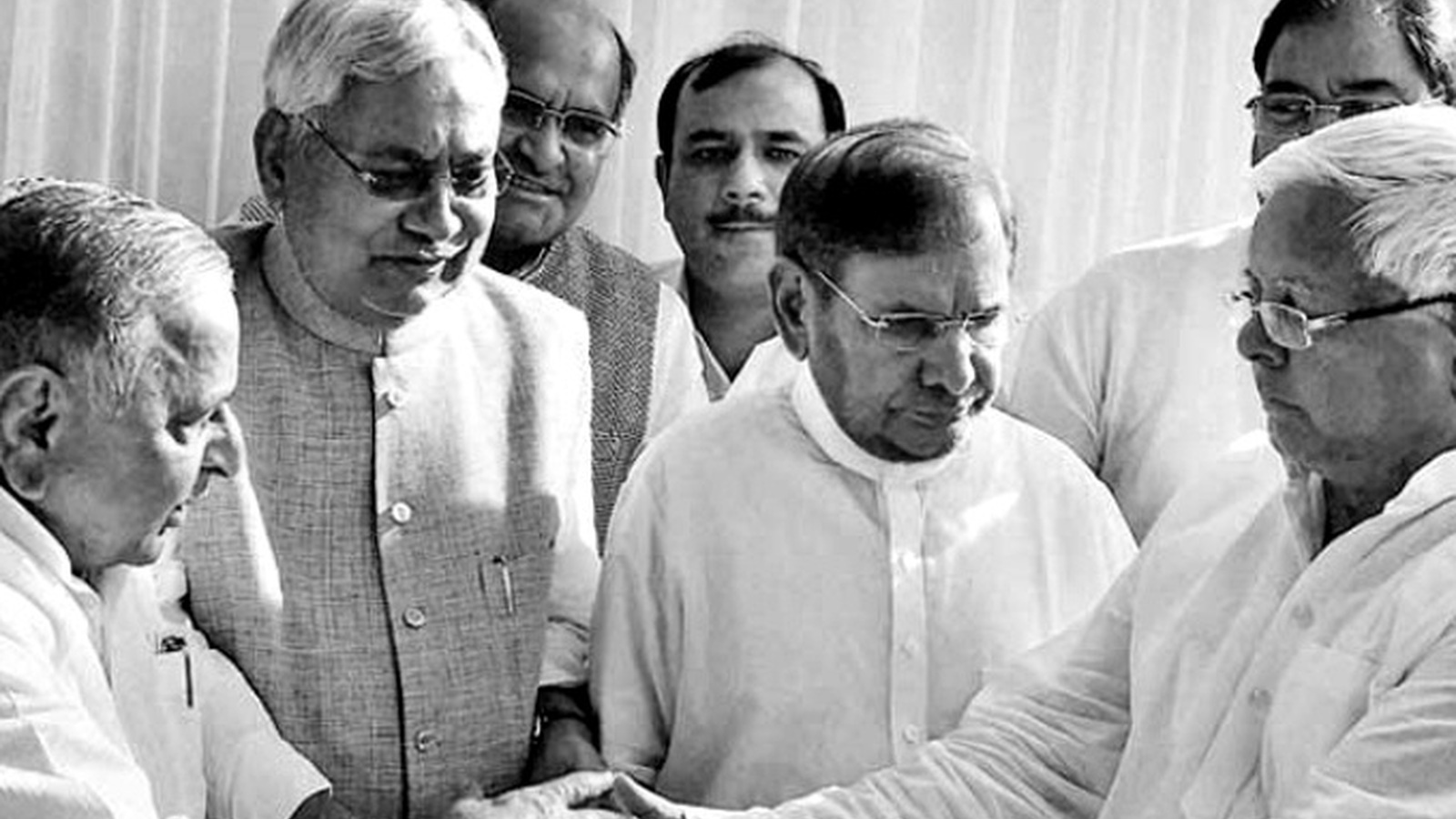
The lesson of the Mandal Commission is that no community is immune from political displacement. The Brahmins who dominated the Indian state for centuries have been displaced by the very state they once served. The OBC politicians who replaced them will eventually be displaced by someone else. The only constant in Indian politics is the relentless pursuit of power, and the only certainty is that today's dominant community will be tomorrow's marginalized one.
But the more profound lesson is that oppression does not end when the oppressed become the oppressors. It merely changes form. The OBC castes that now wield power have become the new oppressors, using the language of victimhood to justify their own domination. The cycle of oppression continues, and the victims are those who have no voice—the most backward among the backward, the Dalits, the Adivasis, and all those who fall outside the calculus of caste politics.
Until India confronts this uncomfortable truth—that the OBC project has created a new hierarchy of oppression—the promise of social justice will remain unfulfilled, and the cycle of caste violence will continue.